
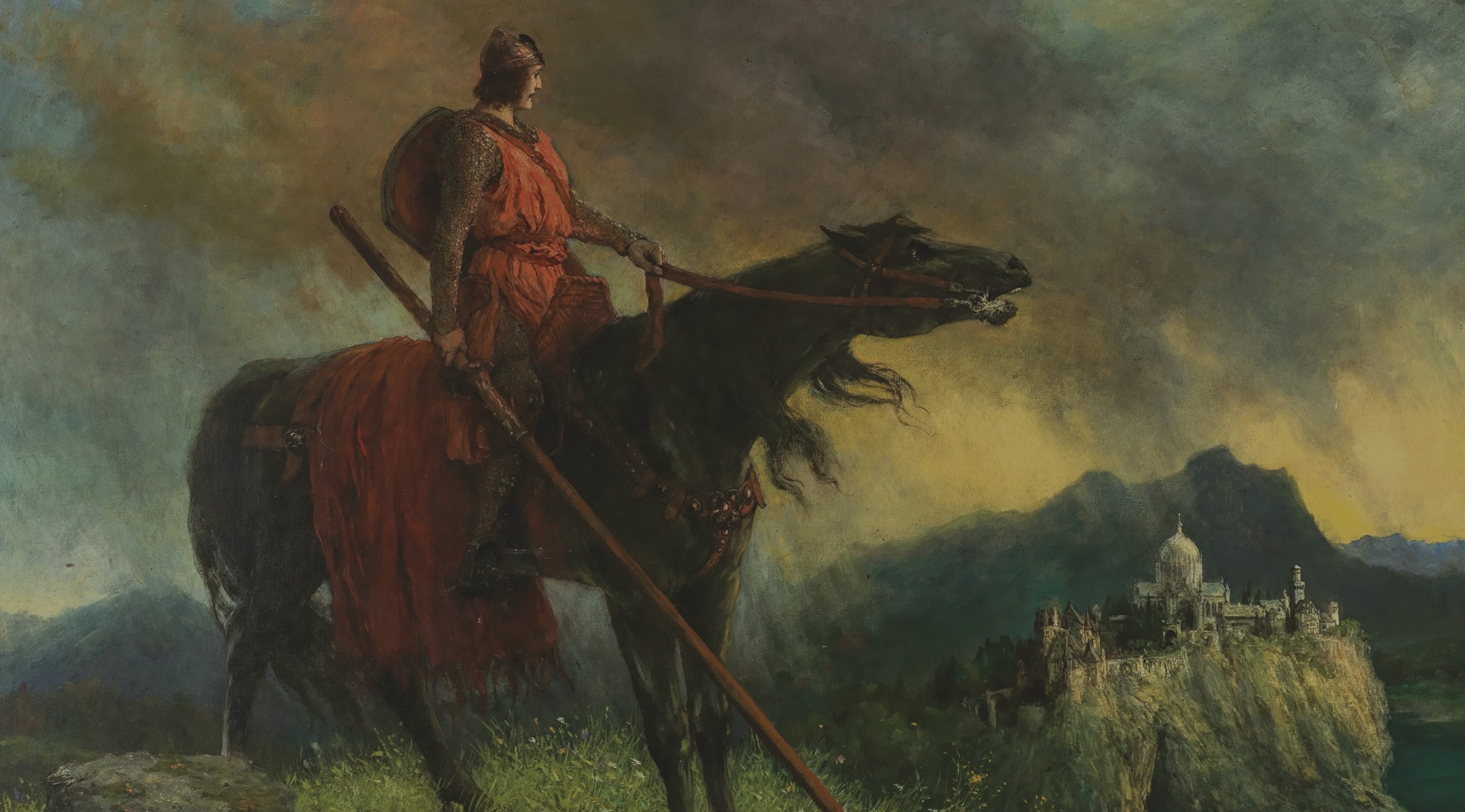
Reviving the mythic imagination through community, shared ritual, and conversation.

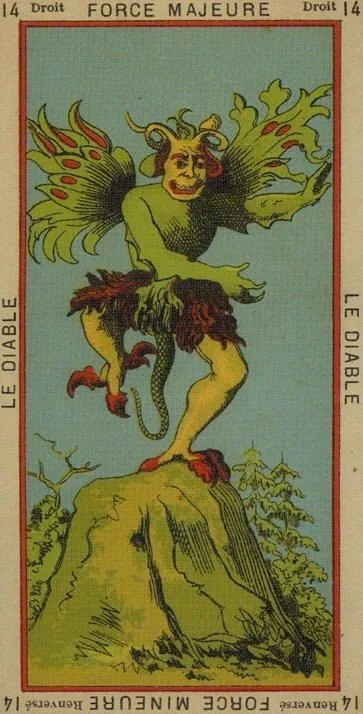
The Devil card from the Etteilla Tarot deck, designed by Jean-Baptiste Alliette (Etteilla).Explore Our Membership
Learn with us.
Join us through Summer and Autumn for a series on Dealing with the Devil: Exploring Stories and Representations of Evil in the West
How do we grapple with representations of “the adversary" in mythopoetics? How do we distinguish between that which is truly malevolent and that which is merely “other”?
Discussion of “the devil" and “evil" in the West snaps into either dogmatized literalism or pluralistic dead-ends. What might we gain from exploring how the embodiment of evil has been portrayed in different eras in the West? Might we develop more nuance and inquisitiveness in response to “demonization," when we witness it around us? If we want to know “good," do we not need to be able to identify what opposes it?
From July to November, The School of Mythopoetics will focus on representations of evil in the West. We will explore the concept of Shadow in Jungian psychology, holding an awareness that the world cannot be reduced to a psychological theory. The mythic Trickster will dance alongside us as we endeavor not to conflate his generative and catalytic mischief with the diabolical, twister of goodness that plays such a prominent role in Western Cosmology.
Browse the Archives
Explore conversations, stories, and our public archive of past events with incredible storytellers, practitioners, and mythologists worldwide.

Acknowledgements
Mythopoetics in Culture
What we as stewards understand as “mythopoetics” has been practiced in response to a trend over many centuries in western culture that views the world on a purely material / empirical level.
Traditional cultures around the world have always recognized animate forces and the emergent architecture of creation that the modern materialist perspective fails to recognize. The movement to turn back to myth, symbol, and ritual in recent decades represents a reclamation of our birthright as human beings.
We acknowledge that those who began and shaped the modern mythopoetic movement—such as Marion Woodman, Robert Bly, Clarissa Pinkola Estes, James Hillman, Joanna Macy, Michael Meade, and Carl Jung—were mainly white, middle class, cis-hetero folk and therefore had limitations in their perspectives due to the cultural moment they existed within.
Inside of the School of Mythopoetics, we draw upon the richness and nuance of a much wider lens informed by our current time that includes queer, post-colonial and non-ableist discourses. To this end, we draw upon the work of thinkers such as Sobonfu Somé, Malidoma Somé, Bayo Akomolafe, Pat McCabe, Sophie Strand, Kai Cheng Thom, and Zhenevere Sophia Dao, amongst others.
We honor and welcome this new guard of contributors to the mythopoetics of our current time, alongside the old guard whose torch we’ve picked up and carry forward.
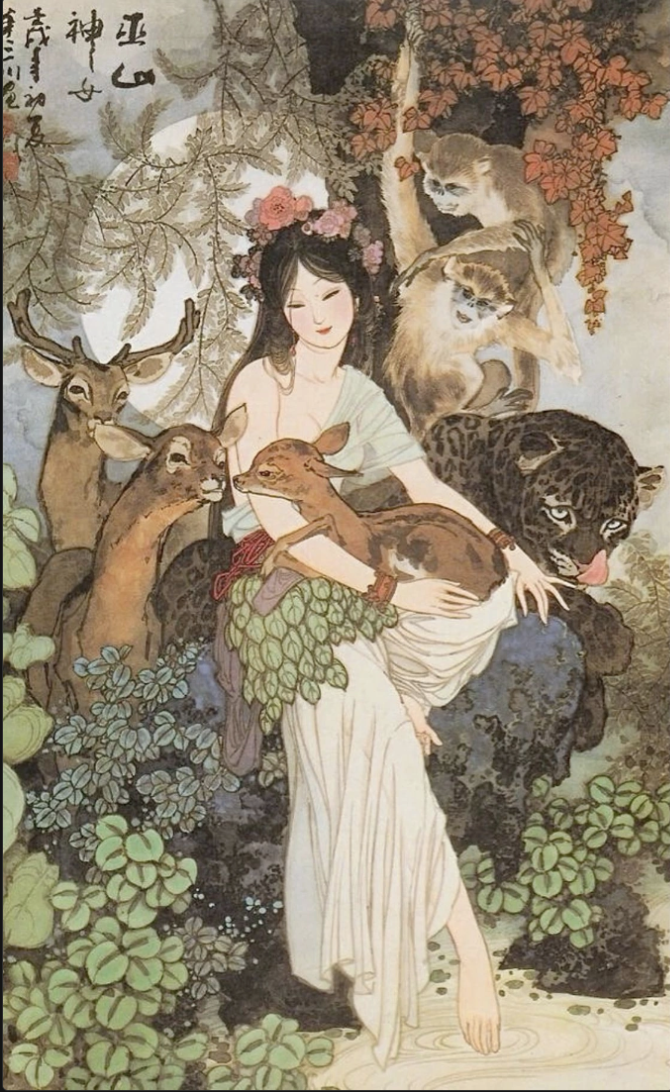
Shānguǐ Mountain Ghost by Chinese artist Hua Sanchuan (1930-2004).