
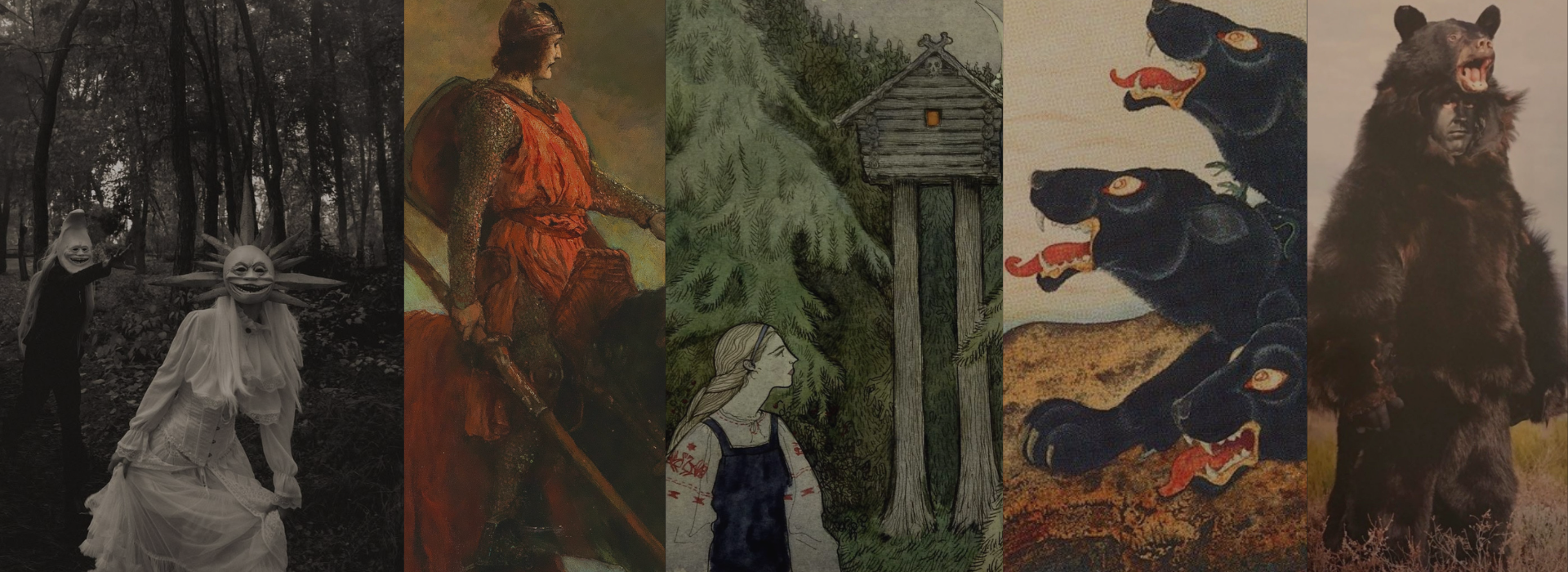
Learn to speak the language of the soul through the symbols of myth and fairytale.
Our twice-monthly sessions feature an all-levels space focused on exploring mythology, symbolism, poetry, deep listening, imagination, and regenerating culture in the context of our troubled times.
What you receive when you join the membership:
→ Instant access to an archive of 10+ live interviews and writings on archetypal themes with guest teachers such as Dr. Bayo Akomalafe, Pat McCabe, Caroline Casey, Josh Schrei, and more...
→ Instant access to 25+ hours of replays from mythopoetic events featuring storyteller, poets, musicians, and other culture weavers such as Michael Meade, Jan Blake, Isis Indriya, Rune Hjarnø Rasmussen, and many more...
→ Instant Access to a living storytelling archive featuring current and past stewards of The School of Mythopoetics and other members of the community. These tellings will be rolled out over time...
→ Twice monthly 2-hour live group calls for mythopoetic study with Rainer Baumorr and other current School of Mythopoetics stewards. Find our monthly themes below.
→ Access to all call replays, study notes, and resources created exclusively for the School of Mythopoetics members.

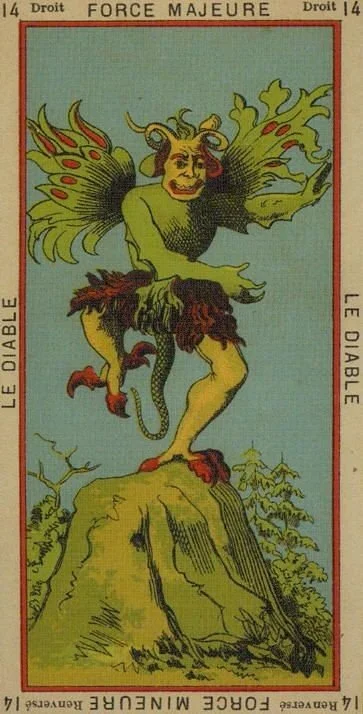
The Devil card from the Etteilla Tarot deck, designed by Jean-Baptiste Alliette (Etteilla).Our Theme for Summer and Autumn
Dealing with the Devil:
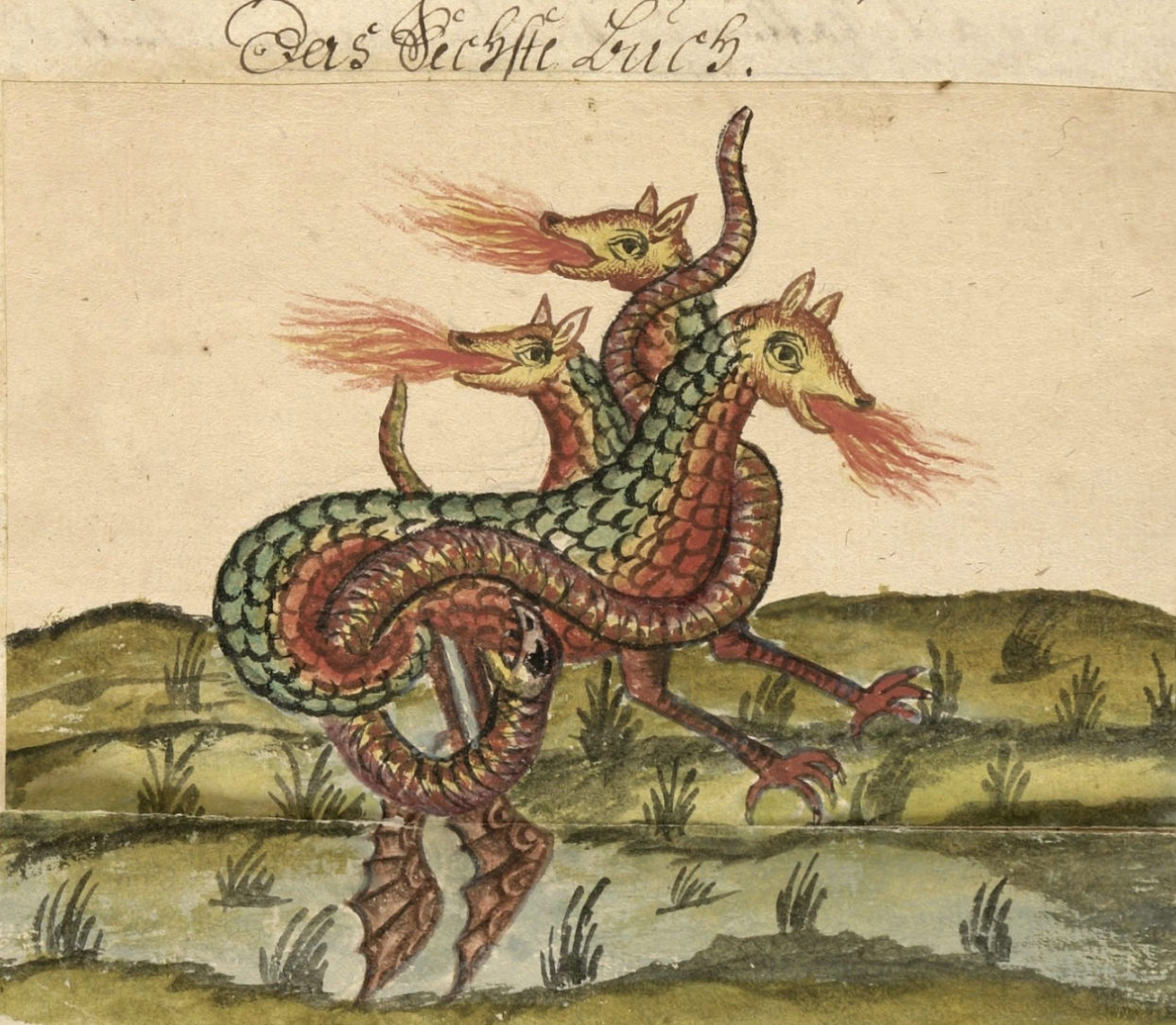
The Mythopoetics of Shadow, Evil, and the Underworld in the West
How do we grapple with representations of “the adversary" in mythopoetics? How do we distinguish between that which is truly malevolent and that which is merely “other”?
Discussion of “the devil" and “evil" in the West snaps into either dogmatized literalism or pluralistic dead-ends. What might we gain from exploring how the embodiment of evil has been portrayed in different eras in the West? Might we develop more nuance and inquisitiveness in response to “demonization," when we witness it around us? If we want to know “good," do we not need to be able to identify what opposes it?
From July to November, The School of Mythopoetics will focus on representations of evil in the West. We will explore the concept of Shadow in Jungian psychology, holding an awareness that the world cannot be reduced to a psychological theory. The mythic Trickster will dance alongside us as we endeavor not to conflate his generative and catalytic mischief with the diabolical, twister of goodness that plays such a prominent role in Western Cosmology.
-
Primary Text (PT): Shadow and Evil in Fairy Tales, Marie Louise von Franz
Supplementary Material (SM): Four Archetypes, CG Jung, Shadow, Evil, and Individuation, This Jungian Life Podcast;Description:
By now most westerners have at least some exposure to the psychological framework of Carl Jung. Among the many principles that make up his theory of psychological development is the concept of Shadow. The School of Mythopoetics begins its year long study of Dealing with the Devil: The Mythopoetics of Shadow and Evil in the West with a deep dive into Marie Louise Von Franz’s book Shadow and Evil in Fairy Tales.
Von Franz is seen as Jung’s immediate successor in the world of Jungian psychology. Her book will provide a backbone for July and August as we begin to grapple with and tease out the nuances of Jung’s legacy.
By beginning with Von Franz’s work we’ll start to see the lines between the psychological/internal experience of darkness and the reality of malevolent forces beyond our subjective experience. We’ll question the notion of “integrating” or “embracing” the Shadow as we afford reality to what has been called evil. We’ll use the mythopoetic lens to build discernment between our own repressed humanity and otherworldly forces that corrupt and corrode the soul.
-
PT: Shadow and Evil in Fairy Tales, Marie Louise von Franz
SM: The Revolution Will Not Be Psychologized - The Emerald; We’ve Had 100 Years of Psychotherapy…, James Hillman; Dark Forces in the Psyche - This Jungian Life
-
PT: The Inferno, Dante tr Jason Baxter; Trauma and the Soul, Donald Kalasched
Description:
In months 3 and 4 of Dealing with the Devil we’ll approach one of the greatest (if not the greatest) works of western literature: The Divine Comedy by Dante Alighieri. We’ll focus particularly on The Inferno, the first book of The Divine Comedy, and particularly the figure of Dis, the ruler of the Inferno.
Following our exploration of the psychological lens with Marie Louise Von Franz, we’ll work with a somatic lens using Donald Kalsched’s book Trauma and the Soul. I came across this book last year in a time of deep personal trouble. Its deft weaving of psychology, somatics, and mythopoetics helped anchor me as I struggled internally with the most focused period of “shadow work” I’d ever done. It in many ways played a big part in inspiring the creation of this course. It gave me a framework to recognize “Hell” as something someone can live everyday, as opposed to a place one will go when one dies. It gave me eyes to see a force I may experience internally, but that nonetheless exists beyond me and my subjectivity.
These two months will provide a bridge between the merely psychological lens and the somato-spiritual. Our time together will be informed by my training as a Somatic Experiencing Practitioner as we cross-pollinate the fields of somatics and mythopoetics.
-
PT: The Inferno, Dante tr Jason Baxter; Trauma and the Soul, Donald Kalasched
SM: Trauma and Vegetation Gods - The Emerald
Description:
In months 3 and 4 of Dealing with the Devil we’ll approach one of the greatest (if not the greatest) works of western literature: The Divine Comedy by Dante Alighieri. We’ll focus particularly on The Inferno, the first book of The Divine Comedy, and particularly the figure of Dis, the ruler of the Inferno.
Following our exploration of the psychological lens with Marie Louise Von Franz, we’ll work with a somatic lens using Donald Kalsched’s book Trauma and the Soul. I came across this book last year in a time of deep personal trouble. Its deft weaving of psychology, somatics, and mythopoetics helped anchor me as I struggled internally with the most focused period of “shadow work” I’d ever done. It in many ways played a big part in inspiring the creation of this course. It gave me a framework to recognize “Hell” as something someone can live everyday, as opposed to a place one will go when one dies. It gave me eyes to see a force I may experience internally, but that nonetheless exists beyond me and my subjectivity.
These two months will provide a bridge between the merely psychological lens and the somato-spiritual. Our time together will be informed by my training as a Somatic Experiencing Practitioner as we cross-pollinate the fields of somatics and mythopoetics.
-
PT: The Other Within, Daniel Deardorff
SM: The Soul’s Code, James Hillman; Holy Daimon, Embodiment Means Being Torn Apart and Flying Away - The Emerald
Description:
To close the first half of Dealing with the Devil we’ll look at the work of Daniel Deardorff. Danny was a phenomenal bardic storyteller who lived in Port Townsend, Washington, and stands among the likes of Robert Bly and Martin Shaw for the contributions he made to the tradition of mythopoetics in the West. His book The Other Within provides a window into the exceptional life he lived as a purveyor of wisdom and mythic depth, while sequestered to a wheelchair.
Without addressing the notion of Shadow offered by Jung directly, Deardorff articulates a vision, unparallelled in nuance and complexity, of how our inner depths hold the mysterious genius we were born to manifest. His book takes the psychological and somatic perspectives we will have developed and grounds them socioculturally using a mythic grammar that requires profound patience and openness to truly absorb the wisdom it carries. Our brief time with his work will offer a mere taste.
Deardorff’s work becomes germane to Dealing with the Devil by helping us couch suffering in a greater picture of self-becoming without centering “the self” as the be-all-end-all of our time on this planet. Through his eyes, the suffering presided over by the fires of Dis in the Inferno deliver us to the redemptive, shall we say alchemical, flames of Purgatory. Through his work we can draw hope and solace that though we may suffer, the Cosmic Good uses that suffering to redeem, to edify, and to shine light on the beauty of creation.
Our Approach
There are many ways to approach mythopoetic material. In the School of Mythopoetics, we center a soul-centric, body-oriented approach that goes beyond intellectual analysis, allowing us to truly digest the material at a more relevant level. During our twice-monthly sessions, you will be expertly guided through this process using the following pillars:
01 Insight
We will work thematically to draw on the work of poets, storytellers, and writers of the mythopoetic movement who have contributed work which addresses the troubles of our time in innovative ways.
02 Connection
We will spend time in structured small groups and as a singular large group, offering witness to one another and reflecting on our own journey in light of the material we are exploring.
03 Practice
We will engage in practices of deep listening, as well as nurturing physical practices to promote a sense of somatic receptivity which will allow us to be more present with our mythic depths.
A Few of our Guest Teachers
-

Pat McCabe
Indigenous Wisdom-Keeper
-

Bayo Akomolafe
Philosopher and Author
-
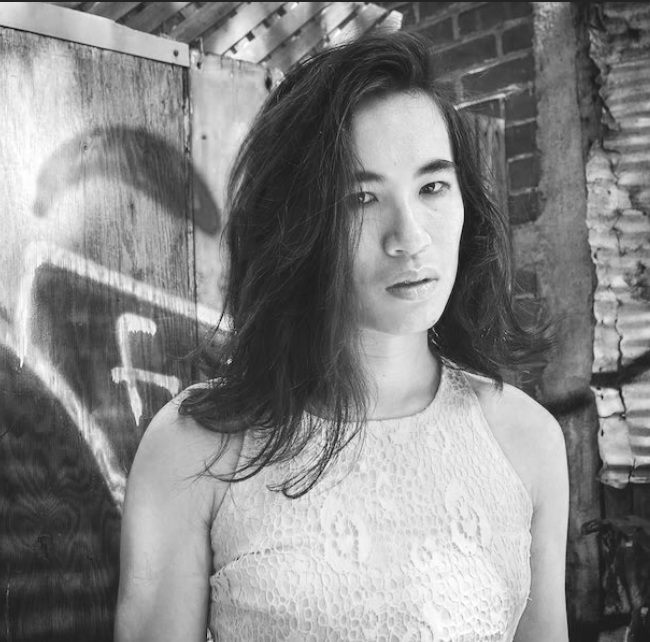
Kai Cheng Thom
Writer and Cultural Worker
-
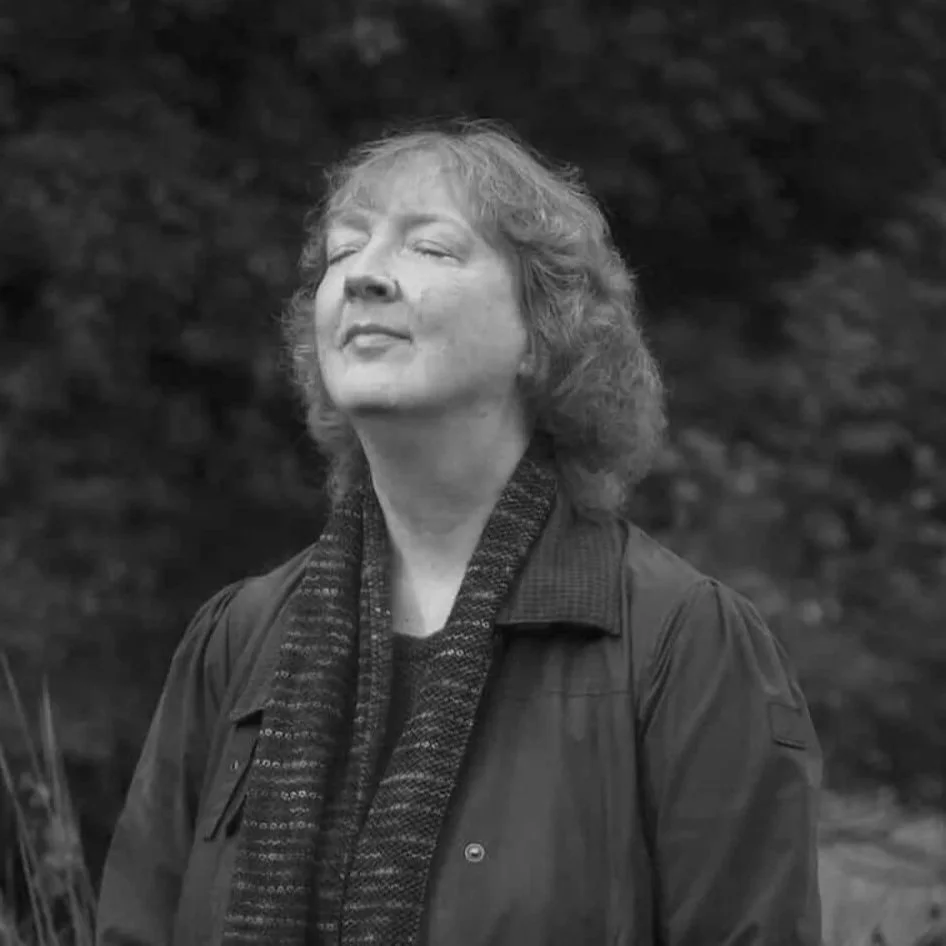
Sharon Blackie
Psychologist
-
Tom Hirons
Author and Poet
-
Zamir Dhanji
Yogi and Storyteller
-

Polina Tšerkassova
Storyteller and Musician
-
Rune Hjarnø Rasmussen
Historian
-

Isis Indriya
Ritualist and Culture Creator
-
Åsmund Seip
Poet
-

Langston Kahn
Shamanic Practitioner and Teacher
-

Judith Liberman
Storyteller
What is myth·o·po·et·ics?
It’s the practice of working with story, symbol, poetry, and myth to deepen a sense of meaningful connection to one’s soul path.
It is the reawakening of the mythic imagination.